Choosing the right loading ramp for trucks is essential for efficiency and safety. This task can feel overwhelming. Many factors affect the selection process, especially when considering how to choose loading ramps for different truck heights.
With various truck designs and heights, finding the perfect ramp is crucial. Poor choices may lead to accidents or damage. A ramp must provide a secure, stable transition. It's not merely about convenience; it's about ensuring every load is handled safely and efficiently.
Understanding materials, weight capacities, and ramp angles is vital. Each aspect plays a role in performance and reliability. Ramps come in various sizes and designs, each suited for specific heights and types of trucks. Taking the time to evaluate these details can save money and prevent unforeseen issues. Reflecting on past experiences can guide your decisions. Don't overlook the importance of selecting the right equipment; it’s a key part of any logistical operation.
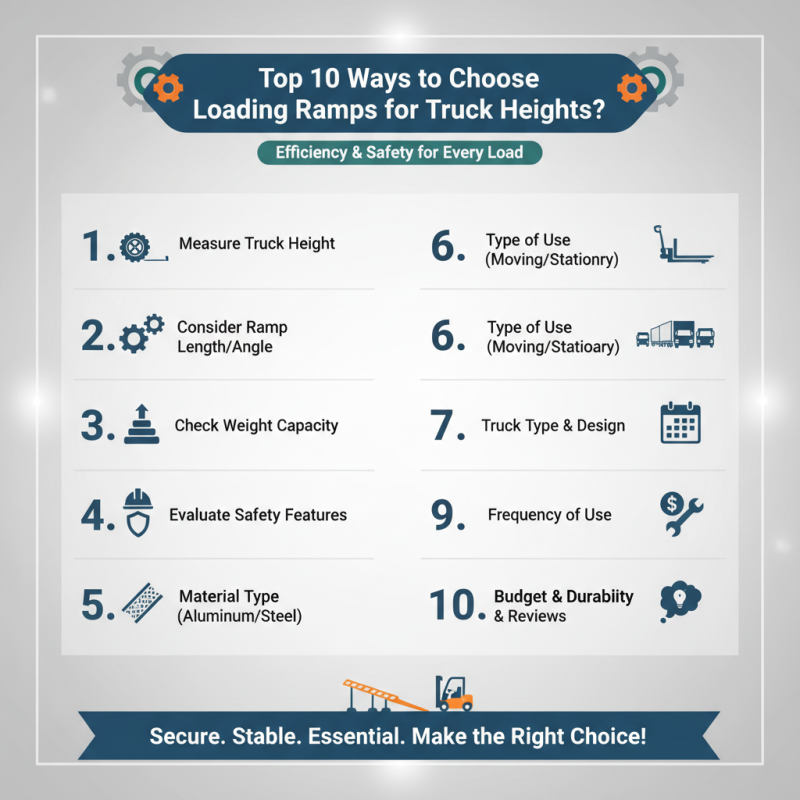
When choosing loading ramps for truck heights, understanding the specifications of your truck is crucial. Truck heights vary greatly, and this affects how trailers align with loading docks. The average truck height ranges from 13.5 to 14.5 feet, but it can differ based on cargo type and model. Know your truck’s height before selecting a ramp, as using the wrong size can lead to accidents.
Consider the load capacity of the ramp as well. Heavy-duty ramps can support significant weights, while lighter options are used for smaller loads. It's vital to pay attention to weight ratings to avoid damage or injuries. Measure the height of the loading area to ensure a seamless transition. Miscalculations can lead to dangerous angles, making loading difficult.
Don’t forget about surface materials. Some ramps offer traction, while others are smooth. Each has its pros and cons. Non-slip surfaces can enhance safety in wet conditions, but they might be less sturdy under extreme weights. Evaluating these material types can impact long-term investment. While planning is essential, be open to adjusting your choices. The specifics may not always align with your initial assessments.
When selecting loading ramps for truck heights, one crucial consideration is the ramp's weight capacity. Many businesses underestimate the impact of weight capacity on safety and efficiency. According to industry standards, ramps should support at least 1.5 times the weight of the heaviest load. This ensures stability and minimizes the risk of accidents.
A recent report indicates that over 30% of workplace injuries in logistics arise from improper loading practices. Inadequate ramp capacity contributes significantly to these incidents. For instance, a ramp rated for 2,000 pounds can buckle under a 1,800-pound load when improperly used. This highlights the importance of careful calculations and adherence to recommendations.
Furthermore, consider dynamic loads versus static loads. Static load ratings often lead to misconceptions. A dynamic load during loading can be substantially higher than a static load measured at rest. Therefore, always choose ramps with a higher dynamic load capacity than the static weight of the cargo. This proactive approach enhances both safety and operational performance in transportation and logistics.
When selecting loading ramps for various truck heights, evaluating ramp material durability and safety is crucial. The materials used can significantly impact the ramp's lifespan and functionality. Steel ramps, for example, offer strength and durability but can be heavy and difficult to maneuver. Aluminum provides a lighter alternative, making it easier to handle, yet it's vital to ensure the thickness meets safety standards.
Safety features also depend on material choices. A non-slip surface is essential, especially in wet conditions. Rubber or textured coatings can enhance grip. Yet, these materials may wear over time, requiring regular inspections. A ramp that appears reliable might still pose risks if the surface degrades.
It's important to consider the weight capacity of the ramp in relation to the trucks it will serve. Some ramps may seem sturdy but fail under intense loads. Reflecting on the intended use can help identify the best options. Each choice has trade-offs that require careful consideration. Durability, ease of use, and safety features should align with specific needs. It's not just about purchasing a ramp; it's about ensuring safe and efficient loading operations.
| Ramp Type | Material | Weight Capacity (lbs) | Length (ft) | Width (in) | Surface Type | Safety Features |
|---|---|---|---|---|---|---|
| Folding Ramp | Aluminum | 1,500 | 7 | 30 | Non-slip | Rubberized edges |
| Bi-Fold Ramp | Steel | 2,500 | 8 | 36 | Textured | Safety straps |
| Straight Load Ramp | Aluminum | 1,000 | 6 | 28 | Smooth | None |
| Motorcycle Ramp | Aluminum | 750 | 6 | 12 | Non-slip | Wheel chock |
| Heavy Duty Ramp | Steel | 5,000 | 10 | 48 | Textured | Anti-slip coating |
| Portable Ramp | Aluminum | 1,200 | 7 | 30 | Non-slip | Locking pins |
| Dual Runner Ramp | Steel | 3,000 | 8 | 24 | Textured | Safety straps |
| Roll-Up Ramp | Aluminum | 1,500 | 7 | 30 | Smooth | Rubber grip |
| Threshold Ramp | Rubber | 1,000 | 3 | 36 | Non-slip | Raised edges |
When choosing loading ramps for truck heights, considering portability and storage features is crucial. A reliable loading ramp should be lightweight yet sturdy. Reports from the Load Handling Association indicate that ramps weighing between 30 to 50 pounds strike a balance between portability and strength.
Tips: Always verify the load capacity. Ensure it meets your specific needs.
Compact storage is essential. Look for ramps that fold easily. This feature allows for quick setup and teardown, making the process efficient. Research by the Materials Handling Industry shows that user-friendly storage saves time and space, crucial for busy operations.
Tips: Measure your storage area before purchasing. A ramp that fits in your space will reduce clutter.
Some ramps have additional portability features. Built-in handles or wheels can enhance mobility. However, do not overlook the ramp’s stability when loaded. Conducting a practical test is wise. Reports indicate that a significant percentage of accidents arise from unstable ramps, highlighting the importance of reliability.
When choosing loading ramps, versatility is essential. Different loading scenarios require ramps that adapt well to various truck heights and cargo types. A ramp must handle uneven surfaces and varying weight distributions. For instance, a ramp used for leveled ground may not perform the same on inclines. Assessing these factors ensures efficient loading and unloading.
Load capacity and material are crucial. Heavy-duty ramps can accommodate more weight but may be cumbersome. Lightweight options are easier to handle but may not support larger loads. Consider the balance between ease of use and durability. Utilizing a ramp with adjustable heights might seem convenient, but mechanical failures can quickly compromise safety. Regular inspections are vital to maintaining reliability.
The ramp's width is another variable. A narrow ramp suits smaller vehicles but restricts larger equipment. Ensure the ramp is wide enough for diverse cargo. Always weigh the needs of different loading scenarios when selecting a ramp. A choice that works now may not suit future requirements. Being flexible in your approach will make your loading process much more efficient.
: Common materials include steel and aluminum. Steel offers strength but can be heavy. Aluminum is lighter but needs to meet safety standards.
A non-slip surface enhances safety, especially in wet conditions. Rubber or textured coatings provide better grip.
Regular inspections are essential. Surface materials can wear over time, posing risks if not checked frequently.
The weight capacity should match the trucks it will serve. Some ramps may seem sturdy but can't handle heavy loads.
Portability is crucial. Ramps should be lightweight yet sturdy. Weighing between 30 to 50 pounds balances these needs.
Look for ramps that fold easily for compact storage. Measuring your storage area beforehand is also advisable.
Conduct practical tests before use. Stability is vital, as many accidents arise from unstable ramps.
Adjustable ramps offer convenience but can fail mechanically. Regular inspections help maintain their safety during use.
A narrow ramp may be suitable for small vehicles, but it limits larger loads. Ensure the width fits your diverse cargo needs.
Consider durability, ease of use, and safety features. Each choice has trade-offs requiring careful thought and reflection.
When considering how to choose loading ramps for different truck heights, it's essential to understand the specific height specifications of your trucks. This knowledge will help you select ramps that accommodate varying truck sizes effectively. Additionally, identifying the weight capacity of the ramps is crucial to ensure they can safely support the loads being transported.
Durability and safety of the ramp materials should also be evaluated, as these factors influence both the ramp's lifespan and the safety of loading operations. Furthermore, consider the portability and storage features of the ramps, especially if they need to be frequently moved or stored away. Lastly, examining the versatility of the ramps for various loading scenarios will ensure you have the right equipment for different tasks, making your loading operations more efficient and safe.

Benefits Machinery