In today’s diverse industrial landscape, adapting equipment to various work environments is crucial. Lifting platforms, serving as essential tools in construction and warehousing, must meet specific needs. According to a report by IBISWorld, the global market for aerial work platforms is projected to reach $10.3 billion by 2025, highlighting a growing demand for customizable solutions.
Understanding how to adapt lifting platforms to different working environments involves evaluating factors like terrain, space limitations, and load requirements. A survey from Grand View Research indicated that 75% of companies prioritize flexibility when selecting lifting solutions. This indicates that customization is not just preferred; it is necessary in many scenarios.
However, there are challenges to consider. Not every customization option suits all environments, and improper adaptations can lead to safety risks. It is vital to assess each environment thoroughly. Effective customization requires collaboration among engineers, safety experts, and users to create the best solutions. Striking the right balance can take time, with ongoing evaluation for improvements essential.
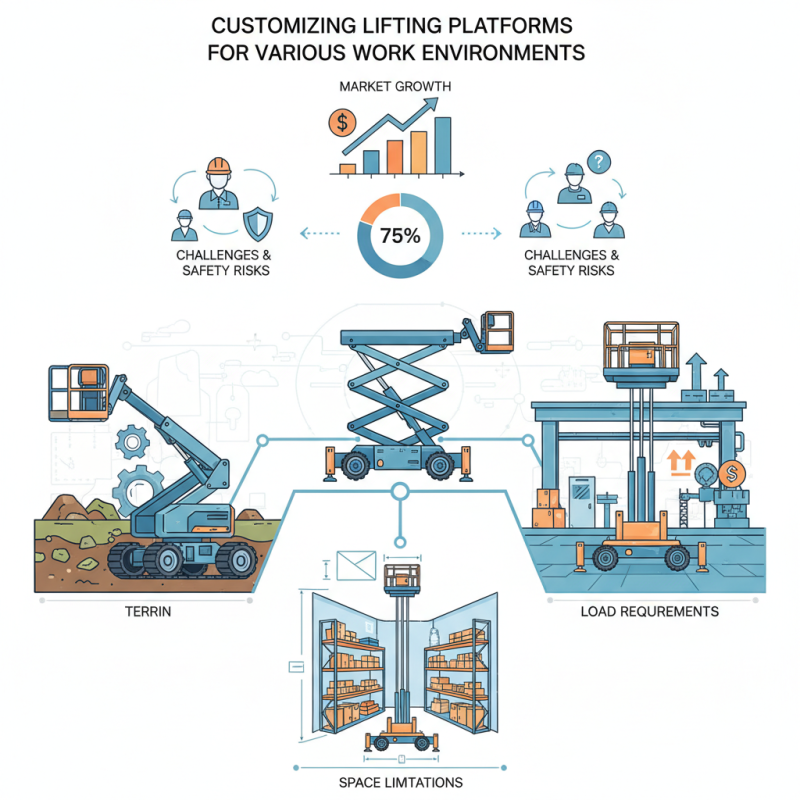
Customizing lifting platforms for different work environments requires a deep understanding of specific needs. Industries such as construction, manufacturing, and logistics present unique challenges. Each setting demands distinct features to enhance safety and productivity.
In construction, platforms may need to accommodate rough terrains. They should be stable and adaptable. Features like adjustable heights and rugged surfaces can make a significant difference. In manufacturing, precision is key. Platforms often require customization for load capacity and workspace dimensions. Ergonomic designs can mitigate strain on workers during repetitive tasks.
Logistics environments may focus on mobility. Compact and easily maneuverable platforms can streamline operations. However, customization can sometimes lead to oversights. Designers must constantly evaluate if the adaptations meet the actual demands of each setting. Balancing functionality with safety is vital. Regular feedback from users can uncover flaws and encourage improvement. Making informed adjustments will enhance the effectiveness of lifting platforms in diverse work environments.
Lifting platforms are crucial in various industries, enhancing efficiency and safety. Different applications require specific types of platforms to meet unique demands. For instance, scissor lifts excel in tight spaces, offering stability and excellent vertical reach. In contrast, boom lifts provide versatility for accessing elevated areas, especially in construction and maintenance tasks. According to a report by Grand View Research, the global lifting equipment market is expected to reach $36 billion by 2025, underscoring this rising demand.
When customizing lifting platforms, consider the operational environment. Indoor environments may favor electric lifts for quiet, emission-free performance. Outside, platforms must be rugged, allowing for weather exposure and uneven surfaces. A recent industry survey indicated that 62% of users prioritize platform capacity and height in their buying decisions. This data suggests that understanding user needs leads to smarter design choices.
Tips: Always assess the workspace before choosing a platform. Test load capacity to ensure safety. Regular maintenance is vital; neglecting it could compromise functionality. Evaluate your needs to avoid over-engineering, which can increase costs and complexity.
When customizing lifting platforms for different work environments, several key features must be considered. First, the height and weight capacity play a crucial role. The platform should accommodate the specific loads while ensuring stability. Additionally, adjustability is essential. A platform that can easily adapt to various heights will increase versatility.
Tips for choosing the right materials are important. Steel offers durability, while aluminum is lightweight. The choice depends on the environment. For example, corrosive environments require materials that can withstand rust. Also, consider safety features like guardrails and non-slip surfaces. These can prevent accidents and ensure worker safety.
Ergonomics cannot be overlooked. Platforms should be designed for ease of use. Custom controls can enhance operational efficiency. However, it's vital to gather feedback from users. Employees often have insights that can lead to improvements. Sometimes modifications may not work as intended, necessitating further iterations. Test different configurations to find the best fit.
| Feature | Description | Importance | Applicable Environments |
|---|---|---|---|
| Load Capacity | The maximum weight the platform can safely lift. | High - Crucial for safety and efficiency. | Industrial warehouses, construction sites |
| Platform Size | Dimensions of the platform area for accommodating different loads or equipment. | Medium - Affects usability in confined spaces. | Manufacturing facilities, loading docks |
| Mobility | The ability to move the platform easily from one location to another. | High - Essential for multi-location use. | Construction sites, maintenance work |
| Height Adjustment | The range and ease of adjusting the platform's height. | High - Critical for tasks requiring variable height. | Aerial work, installations |
| Safety Features | Includes guardrails, emergency stop buttons, and non-slip surfaces. | Very High - Ensures operator safety. | All environments, especially high-risk work |
| Power Source | Hydraulic, electric, or manual options based on availability of resources. | Medium - Influences where the equipment can be deployed. | Remote areas, indoors/outdoors |
Lifting platforms play a pivotal role in diverse work environments. To optimize their functionality, innovative accessories can be integrated.
Consider using expandable guardrails. They enhance safety by preventing falls in construction sites. Another accessory worth considering is the adjustable platform height. This feature allows greater flexibility for tasks at varying elevations.
Tips for improving functionality include evaluating specific needs. Identify common tasks your team encounters daily. For instance, if workers frequently lift heavy items, adding ergonomic handles may reduce strain. Additionally, assess the environment for potential hazards. A well-placed non-slip surface can significantly reduce accidents.
Reflecting on existing setups can reveal gaps in efficiency. Are your current platforms too narrow for certain loads? This could lead to unnecessary risks.
Introducing wider platforms with integrated storage solutions may streamline workflow. Equipment like magnetic tool trays can prevent loss and enhance productivity. Careful customization can facilitate a safer, more effective work environment.
When customizing lifting platforms for various work environments, compliance with safety regulations is crucial. The Occupational Safety and Health Administration (OSHA) mandates that any alterations to lifting equipment adhere to established safety standards. This includes ensuring platforms are designed to withstand specified load capacities and environmental conditions. According to industry reports, more than 65% of accidents involving lifting equipment are linked to improper modifications, emphasizing the importance of adhering to regulations.
For effective customization, consider the specific environment where the platform will operate. For example, platforms used in wet conditions must feature anti-slip surfaces. Additionally, incorporating safety features such as guardrails and emergency shut-off switches can significantly reduce accident risks. Regular maintenance and inspections are essential for keeping platforms compliant. Data shows that platforms with routine checks experience 30% fewer incidents.
Tips: Always ensure that your teams are trained in using customized platforms. Review local regulations frequently, as they can change. Seek expert consultation when making significant modifications to ensure compliance. Remember that thorough documentation of modifications is vital for legal compliance.
: Focus on stability and adaptability to accommodate rough terrains. Adjustable heights and rugged surfaces are key features.
Precision affects load capacity and workspace dimensions, ensuring that platforms are ergonomic to reduce worker strain.
Compact and maneuverable platforms enhance operation efficiency and streamline logistics tasks across diverse spaces.
Customization can lead to oversights if adaptations do not meet actual demands. Continuous evaluation is essential.
Expandable guardrails prevent falls, and adjustable platform heights add flexibility for various tasks.
Regular maintenance is crucial; neglect could compromise functionality and lead to safety hazards.
Assess workspace needs to avoid platforms that are too narrow or inadequate for handling certain loads.
Electric lifts are ideal for indoor use due to quiet operation, while outdoor platforms must withstand weather and rough terrain.
Ergonomic handles can significantly reduce strain for workers, especially when lifting heavy items frequently.
Observing workflow can reveal if current platforms are inadequate, leading to unnecessary risks or inefficiencies.
When considering how to adapt lifting platforms to different working environments, it is essential to understand the specific requirements of each setting. Various applications may necessitate different types of lifting platforms, ranging from scissor lifts for indoor use to boom lifts for outdoor tasks. Customization should focus on key features such as weight capacity, height range, and maneuverability to ensure the platforms meet the unique demands of their operational context.
Additionally, innovative accessories can enhance functionality, making lifting platforms more versatile and efficient. It's crucial to adhere to safety regulations and compliance standards when customizing these platforms to ensure the safety of users and equipment. Ultimately, the goal is to create lifting solutions that are not only effective but also compliant with industry standards, thereby promoting a safe and productive work environment.

Benefits Machinery