How to control noise in lifting platform operation is not a question of adding insulation alone. It begins with understanding where sound starts, how it travels, and who receives it. In a busy warehouse, a hydraulic pump may create a low hum, while loose guardrails produce sharp rattling. Platform movement can also amplify vibration through steel floors and nearby structures.
Noise-control engineer Colin H. Hansen has emphasized, “The best noise control is achieved at the source.” This principle guides practical inspection. Technicians should check motor alignment, hydraulic pressure, bearing condition, wheel contact, and fastener tightness before selecting barriers or enclosures. A simple sound-level reading near the operator’s position can reveal changes that ordinary hearing misses. Short recordings made during lifting, lowering, and stopping can also expose irregular mechanical noise.
However, no method is perfect.
A quiet platform may still transmit vibration through its base. Soft mounts can reduce noise, but incorrect stiffness may affect stability or maintenance access. Enclosures can lower sound levels, yet they may trap heat and hide developing faults. These trade-offs deserve honest review. The safest approach combines equipment maintenance, vibration isolation, sensible operating speed, and repeated measurements under real working conditions.
This article introduces practical ways to control lifting-platform noise without losing reliability. It considers the sound source, transmission path, operator exposure, and surrounding workspace. The recommendations remain grounded in field experience, but conditions vary. A solution that works in one facility may fail beside concrete walls or reflective metal surfaces. Careful testing matters more than confident assumptions.
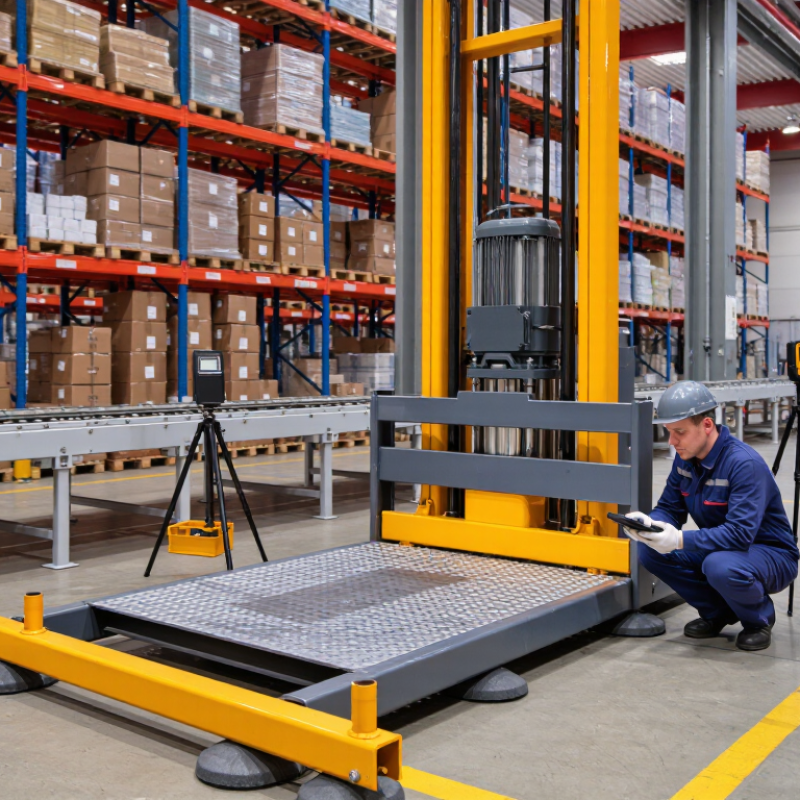
Noise during lifting platform operation is rarely caused by one component. The sound often changes as the platform rises, stops, or carries a heavier load. A sharp metallic click may indicate loose pins, worn bushings, or poor alignment. A deep hum usually points toward the motor, pump, or hydraulic system. Listen before adjusting. That clue matters.
Hydraulic noise can come from trapped air, restricted filters, low fluid levels, or unstable flow. Cavitation may create a rough, crackling sound near the pump. It should not be dismissed as normal machinery noise. The platform’s frame can also amplify vibration, especially on concrete floors or steel structures. Loose fasteners, damaged rollers, and uneven guide rails may produce repeated knocking during movement. In field checks, comparing sound at different heights often reveals more than a single stationary inspection.
The surrounding area can mislead diagnosis. Wind, nearby vehicles, and reverberant walls may make a moderate sound seem dangerous. Operators should inspect the platform with its normal load, then without it, while standing clear of moving parts. A vibration meter can support the assessment, but careful listening remains useful. I have found that rushed adjustments sometimes hide the original fault. Recording the timing, load, and sound pattern creates more reliable evidence for maintenance decisions. Freshly lubricated joints may become quieter, but that improvement does not prove the underlying wear has disappeared.
| Noise Source | Typical Level at 1 m | Main Noise Characteristics | Common Operating Cause | Recommended Control Measures | Verification Method |
|---|---|---|---|---|---|
| Hydraulic pump and power unit | 70–85 dB(A) | Continuous mechanical hum with tonal vibration; level often increases under high pressure. | High hydraulic pressure, worn pump components, restricted filters or low fluid level. | Maintain correct fluid level and viscosity, replace blocked filters, inspect pump condition, use vibration isolators and install an acoustic enclosure with adequate ventilation. | Measure dB(A) at 1 m before and after maintenance; inspect vibration and hydraulic pressure records. |
| Electric motor and fan | 60–75 dB(A) | Broadband airflow and motor noise; may include a high-frequency whine. | Overheating, unbalanced fan blades, loose mounts, bearing wear or excessive motor speed. | Clean cooling passages, balance or replace the fan, tighten mounts, lubricate or replace bearings and use speed control where permitted by the equipment design. | Check motor temperature, fan balance and bearing condition; compare sound levels at idle and full load. |
| Hydraulic valves and fluid flow | 65–80 dB(A) | Hissing, pulsating or intermittent noise caused by turbulent flow or pressure fluctuations. | Air in the hydraulic system, undersized hoses, restricted fittings, cavitation or incorrect valve adjustment. | Bleed trapped air, inspect hoses and fittings, reduce unnecessary pressure losses, correct valve settings and maintain clean hydraulic fluid. | Inspect for leaks and bubbles; compare pressure readings and listen for changes during lifting and lowering cycles. |
| Chain, cable, pulley or guide rollers | 65–85 dB(A) | Rattling, clicking, squealing or rhythmic rolling noise. | Insufficient lubrication, misalignment, excessive tension, worn rollers or debris in guide tracks. | Lubricate according to the maintenance schedule, align guides, adjust tension, replace worn parts and keep tracks clean. | Perform a visual inspection and slow-speed test; check for uneven wear, vibration and abnormal movement. |
| Platform movement and structural vibration | 60–80 dB(A) | Low-frequency rumble or resonance transmitted through the platform, frame or floor. | Loose fasteners, uneven loading, worn guide shoes, structural resonance or rigid contact with adjacent surfaces. | Tighten fasteners, distribute loads evenly, replace worn guides, add suitable isolation pads and eliminate unintended contact points. | Check frame fasteners and clearances; measure vibration at the platform and supporting structure during travel. |
| Loading, unloading and hard stops | 80–100 dB(A) peak | Short-duration impact, clatter or banging noise. | Metal-to-metal contact, abrupt braking, unsecured loads or excessive landing speed. | Use resilient bumpers, reduce landing speed, secure loads, train operators and inspect end-stop dampers. | Record peak levels during repeated cycles; inspect bumpers, stops and load-securing arrangements. |
| Warning alarm or audible signal | 80–95 dB(A) | Distinct intermittent tone designed to remain audible in the work area. | Alarm activation during travel, door opening, overload detection or emergency conditions. | Use the lowest effective alarm setting permitted by the risk assessment; position the alarm correctly and consider visual signals where appropriate. | Verify audibility at the operator and pedestrian positions without exceeding site noise limits. |
Loose pins, worn bushings, damaged rollers, and uneven guide rails can create sharp metallic clicks or repeated knocking.
A deep hum may come from the motor, pump, or hydraulic system. Listen during movement and under normal load.
Trapped air, restricted filters, low fluid levels, or unstable flow may create rough sounds near the pump. Check carefully.
Record the sound at different heights, with and without the normal load. Note the load, travel speed, and timing.
Yes. Concrete floors, steel structures, reflective walls, wind, and nearby vehicles can amplify or distort the sound.
Tighten structural bolts, lubricate moving joints, replace damaged rollers, and install suitable isolation pads beneath the power unit.
No. Excessive rigidity may increase transmitted noise. I have sometimes assumed tighter always meant better, but that was incomplete.
Add rubber barriers or ventilated acoustic panels after identifying the noise path. Keep ventilation and inspection access clear.
No. Lubrication may quiet a joint temporarily. The hidden wear may still remain and require closer inspection.
Record noise readings, platform height, load, travel speed, and recent adjustments. Small details often reveal recurring faults.
How to control noise in lifting platform operation begins with identifying where the sound comes from. Common sources include worn bearings, loose bolts, damaged rollers, hydraulic components, and misaligned moving parts. Regular inspection can reveal unusual rattling, grinding, squealing, or vibration before these issues develop into costly failures. Tightening fasteners, replacing damaged components, and checking structural connections are essential steps for maintaining quieter and safer operation.
Proper lubrication and accurate alignment can significantly reduce friction and mechanical noise. In addition, vibration-damping materials, resilient mounts, protective covers, and suitable soundproofing barriers can help limit noise transmission without affecting platform performance. A routine noise monitoring and maintenance plan should include scheduled inspections, lubrication, alignment checks, vibration assessments, and records of changes in operating sound. By responding promptly to abnormal noise and maintaining equipment consistently, operators can improve comfort, extend service life, support workplace safety, and ensure reliable lifting platform performance.

 Benefits Machinery