Choosing lifting equipment for heavy cargo is not a simple purchasing decision. It affects safety, productivity, energy use, and cargo integrity. UNCTAD’s Review of Maritime Transport reports that more than 80% of global merchandise trade by volume moves by sea. This scale makes reliable cargo-handling systems essential across ports, warehouses, factories, and project sites.
The World Bank and S&P Global’s Container Port Performance Index 2023 assessed 405 container ports worldwide. Its findings highlight how handling speed and operational consistency influence supply-chain performance. Yet speed alone can mislead. A crane that moves 60 tonnes quickly may still be unsuitable for a narrow yard, uneven ground, or frequent outdoor exposure. Real conditions matter.
James A. Tompkins, a widely cited material-handling authority, described the discipline as “the art and science of moving, storing, protecting, and controlling materials.” His principle supports a practical question: How to choose equipment for heavy cargo handling without ignoring the entire workflow? Buyers should compare safe working load, lift height, reach, duty cycle, turning radius, power source, floor capacity, maintenance access, and operator visibility. A 50-tonne load needs more than a 50-tonne rating. Dynamic forces, attachments, wind, load shape, and uneven weight distribution can change the risk.
Measure twice.
This guide will connect equipment selection with real operating conditions, including forklifts, overhead cranes, gantry cranes, reach stackers, and specialized trailers. Some recommendations may remain imperfect because site data is often incomplete. That limitation deserves attention, not concealment. Professional judgment, manufacturer specifications, inspection records, and competent engineering review should support the final decision.
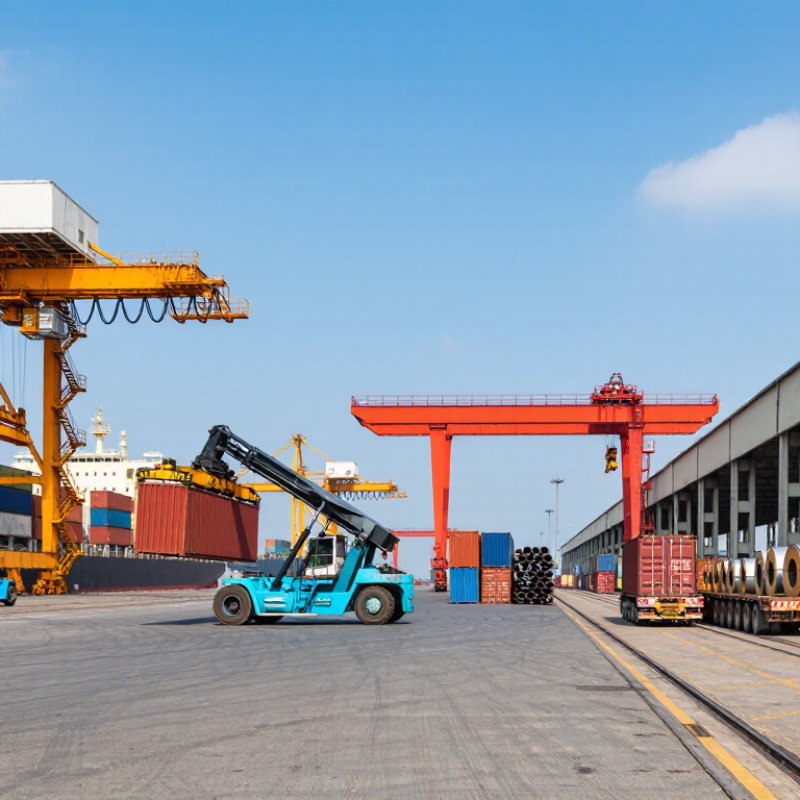
Choosing equipment for heavy cargo starts with four facts: weight, dimensions, shape, and handling requirements. Record the gross weight, center of gravity, lifting points, and any loose components. A 12-ton load may require more than a 12-ton-rated machine. Reach, attachment weight, floor strength, and dynamic movement reduce usable capacity. Do not trust the label alone.
Measure length, width, height, and turning clearance before selecting a crane, forklift, hoist, or spreader. An uneven steel frame can shift suddenly. A long load may need two lifting points and controlled rotation. A neat spreadsheet can still mislead. Recheck measurements at the loading site, where packaging, moisture, or temporary supports may change the actual condition.
UNCTAD’s Review of Maritime Transport 2024 states that more than 80% of global merchandise trade by volume moves by sea, exposing equipment to varied cargo shapes and transfer conditions. Handling requirements also include travel distance, lifting frequency, weather exposure, visibility, and operator control. ASME B30.9 emphasizes inspecting slings before use and removing damaged components from service. The ILO’s 2019 global estimates recorded about 374 million nonfatal work-related injuries annually, showing why small equipment decisions matter. Not every lift fits a formula. Competent workers should verify the load path, attachment method, and emergency access before operation. Human judgment remains essential.
Start with the worksite, not the equipment catalogue. Measure the cargo weight, dimensions, center of gravity, and lifting points. A load that appears compact may become unstable when raised. Check floor strength, slope, drainage, and surface damage. Soft soil, cracked concrete, or loose gravel can reduce traction and increase ground pressure. Use load-spreading mats when the surface needs protection.
Space changes the equipment choice quickly. Record doorway heights, aisle widths, turning areas, overhead beams, and nearby obstacles. Then map the complete travel route. The loading point may be accessible, while the final position is not. Turning radius matters. So does rear clearance. A small measurement error can force awkward reversing or an unsafe lift. Recheck the drawings on site. They are not always current.
The operating environment also deserves close attention. Dust, rain, heat, poor lighting, and cold temperatures can affect visibility and machine performance. Select controls that operators can use accurately while wearing protective gloves. Check rated capacity at the required reach, not only the maximum headline capacity. Keep a margin for uneven ground and changing load balance. A rushed assessment often misses these details. That mistake is expensive. Ask experienced operators to review the plan, and confirm inspection, training, maintenance, and local safety requirements before work begins.
Choosing heavy cargo equipment starts with the load, not the machine’s appearance. Capacity must exceed the verified cargo weight, including pallets, attachments, and shifting forces. A 10-ton load may need more than a 10-ton rating when its center moves outward. Check the load chart at the actual lift height and reach. This is where many planning errors begin. In my experience, a generous safety margin helps, but an oversized machine can reduce visibility and waste floor space. Bigger is not automatically safer.
Reach affects stability, cycle time, and operator workload. A short-reach handler may lift efficiently near the mast, while telescopic or crane-type equipment suits elevated or distant positions. Measure aisle width, turning radius, overhead clearance, floor strength, and gradients before selecting mobility. A machine that reaches far may travel poorly in a crowded warehouse. That trade-off is easy to underestimate. I have made that assumption before. It needed testing.
Control quality matters as much as lifting power. Proportional hydraulic controls can support smoother placement, while remote controls may improve visibility around blind corners. Look for clear feedback, reliable braking, speed limits, and load monitoring. Fast controls can feel impressive. They can also punish small errors. Compare options during a supervised site trial, using real cargo and typical travel routes. Record lift speed, turning space, operator visibility, and positioning accuracy. Do not trust a brochure alone. Maintenance records, inspection routines, operator training, and independent load testing provide stronger evidence of dependable performance.
| Equipment Type | Typical Rated Capacity | Typical Working Reach | Mobility | Control and Operation | Best-Suited Applications | Key Selection Considerations |
|---|---|---|---|---|---|---|
| Counterbalance Forklift | 1.5–16 tonnes | Fork lift height: approximately 3–7 m | High maneuverability on paved indoor and outdoor surfaces; turning radius depends on capacity and chassis design. | Operator-controlled hydraulic lift and tilt functions; electric, diesel, LPG, or other power options are available. | Loading and unloading, pallet handling, warehouse yards, manufacturing plants, and general material movement. | Check load center, aisle width, floor strength, mast height, attachment requirements, and indoor emission limits. |
| Reach Truck | 1.0–2.5 tonnes | Typical lift height: 6–13 m | Very good indoor maneuverability; designed for narrow aisles and smooth, level floors. | Electric drive with operator controls for mast extension, lifting, tilting, and fork positioning. | High-density warehouse storage, selective racking, and high-bay pallet placement. | Requires smooth floors, controlled operating areas, suitable rack design, and sufficient residual capacity at height. |
| Rough-Terrain Forklift | 2.5–10 tonnes | Fork lift height: approximately 3–7 m | High mobility on uneven outdoor ground; large pneumatic tires and increased ground clearance. | Operator-controlled hydraulic systems; commonly equipped with diesel power and 2-wheel, 4-wheel, or crab steering. | Construction sites, infrastructure projects, lumber yards, agricultural operations, and outdoor material handling. | Evaluate terrain, slope, tire type, ground bearing capacity, weather conditions, and overhead clearance. |
| Telescopic Handler | 2.5–6 tonnes | Horizontal reach: approximately 5–20 m | Good off-road mobility with all-wheel drive and steering modes; less precise than a crane for suspended loads. | Operator-controlled boom extension, lifting, attachment control, and steering; load charts vary by boom angle and reach. | Construction materials, agricultural loads, elevated placement, and projects requiring both reach and rough-terrain travel. | Always use the applicable load chart; capacity decreases as boom reach increases and depends on attachment and stabilizer use. |
| Mobile Crane | 10–1,000+ tonnes | Boom reach: approximately 10–100+ m | Transportable between work areas; setup may require outriggers, lifting mats, road access, and a prepared work zone. | Hydraulic or electronic operator controls with rated-capacity indicators, anti-two-block systems, and lifting-limit devices. | Heavy lifts, machinery installation, structural components, wind-energy work, and large construction projects. | Review the load chart, radius, boom configuration, ground pressure, wind limits, rigging plan, and exclusion zone. |
| Overhead Bridge Crane | 2–500+ tonnes | Vertical lift: commonly 6–30 m; horizontal travel follows runway length | Excellent coverage within a fixed building area; limited to the installed runway and available floor space. | Pendant, cabin, or remote control; variable-speed hoist, trolley, and bridge motion may be available. | Factories, workshops, steel plants, shipyards, maintenance bays, and repetitive indoor heavy lifting. | Confirm building structure, runway capacity, lift height, duty class, power supply, and required hook coverage. |
| Gantry Crane | 5–300+ tonnes | Lift height: approximately 5–30 m; span commonly 10–50 m | Fixed or rail-mounted; some portable gantries can be repositioned, but movement is slower than forklift travel. | Electric or hydraulic hoist with pendant, radio remote, or cabin control; synchronized lifting may be required for large loads. | Outdoor yards, precast concrete, shipyards, container handling, and areas without suitable building support. | Assess rail alignment, ground preparation, wind exposure, span, leg clearance, and load positioning accuracy. |
| Straddle Carrier | 20–80 tonnes | Vertical lift: approximately 8–18 m, depending on configuration | High mobility within container yards; can carry loads while traveling and may use multi-directional steering. | Operator-controlled or automated systems with spreader locking, load monitoring, and coordinated steering functions. | Containers, intermodal terminals, port yards, and repetitive heavy loads with standardized dimensions. | Best where load dimensions are standardized; consider lane layout, pavement strength, handling cycle, and automation needs. |
| Self-Propelled Modular Transporter | 60–10,000+ tonnes, depending on the number of axle lines | Deck height typically approximately 1.2–2.0 m; lifting stroke commonly 300–700 mm | Very high load-positioning mobility with multi-axle steering; suitable for controlled movement over prepared surfaces. | Computerized remote or onboard control for steering, speed, suspension leveling, and coordinated module operation. | Refineries, power plants, ship sections, bridges, industrial modules, and oversized project cargo. | Requires detailed route engineering, turning-radius analysis, bridge-load checks, gradient limits, and surface assessment. |
| Automated Guided Vehicle | 0.5–100+ tonnes, depending on platform design | Travel deck or fork lift height: approximately 0.2–3 m | High repeatability on defined routes; movement is limited by navigation infrastructure, floor condition, and traffic rules. | Software-controlled navigation using laser, magnetic, camera, or other guidance technologies; includes safety scanners and fleet management. | Repetitive factory transport, warehouse transfer, line-side delivery, and predictable internal logistics. | Consider route stability, payload dimensions, battery charging, pedestrian interaction, safety validation, and system integration. |
Important: Capacity and reach figures are typical planning ranges rather than guaranteed ratings. Actual performance depends on load center, attachment, boom or mast position, operating surface, counterweight, wind conditions, duty cycle, and the manufacturer's certified load chart. Select equipment only after a site-specific risk assessment and confirmation of applicable lifting and workplace-safety requirements.
Choosing equipment for heavy cargo handling starts with verified safety standards, not appearance or lifting speed. Request current inspection records, conformity documents, and load-test results from the supplier. Check whether the equipment suits your site, cargo shape, floor condition, and lifting frequency. A machine rated for ten tonnes may lift less on uneven ground or extended reach. Read the nameplate carefully. It should state the safe working load, lifting range, and operating conditions. Do not rely on sales claims alone.
Compare the rated capacity with the heaviest real load, including pallets, slings, spreader bars, and shifting forces. Keep a practical safety margin, especially when loads swing, stack poorly, or travel across ramps. Maintenance records should show inspections, lubrication, hydraulic checks, brake tests, and replaced parts. Ask who performed the work and when the next inspection is due. Small leaks matter. During a site review, I once focused on capacity and overlooked damaged floor markings near a turning area. That mistake reminded me that equipment safety includes the whole route, not only the machine.
Operators need documented training for controls, load charts, hand signals, emergency stops, and daily checks. Practical assessment is more reliable than attendance alone. Supervisors should observe a trial lift with an empty hook, then a controlled load. Weather, visibility, pedestrian movement, and communication methods deserve attention. Training can fade. Refresh it after incidents, equipment changes, or long periods without use. A written procedure helps, but workers must be able to question unclear instructions without pressure.
Choosing the right equipment for heavy cargo handling starts with the total cost, not the purchase price. A lower-cost machine may consume more energy, require frequent servicing, or need extra operators. Compare fuel or electricity use, maintenance intervals, training expenses, and expected downtime. A simple cost-per-shift calculation often reveals the better option.
F Flexibility matters when cargo sizes and workflows change. Adjustable forks, variable lifting heights, and different attachments can support mixed loads in one facility. Check the equipment’s rated capacity at the required reach, not only its maximum advertised capacity. Leave a sensible safety margin. I have seen planning decisions based on today’s pallet size, only to create problems after one production change. Future needs are difficult to predict, so avoid buying capacity that will sit unused.
Tips: Measure aisle width, floor strength, loading height, and daily movement before comparing models. Ask operators to test visibility, controls, and turning space. Review service access and spare-part availability with qualified technicians. Keep written inspection records, and follow the manufacturer’s load charts and safety instructions. A short trial can expose weaknesses that a brochure hides. No forecast is perfect. Reassess the equipment plan every year as volumes, layouts, and staffing change.
Record gross weight, dimensions, center of gravity, lifting points, and loose components. A 12-ton load may need higher capacity.
Reach, attachment weight, floor strength, and movement reduce usable capacity. Check capacity at the required reach.
Measure doorways, aisles, turning areas, overhead beams, rear clearance, and the complete travel route. Small errors matter.
Soft soil, cracked concrete, slopes, and loose gravel can reduce traction. Load-spreading mats may protect weak surfaces.
Confirm the load path, center of gravity, attachment method, and lifting points. An uneven frame can shift suddenly.
Long or flexible cargo may need two points and controlled rotation. Plan the movement before raising it.
Dust, rain, heat, cold, and poor lighting can reduce visibility and machine performance. Gloves may also affect control accuracy.
Inspect slings before use and remove damaged components. Do not trust a neat spreadsheet alone.
Competent workers and experienced operators should check the plan. Recheck conditions at the loading site.
Do not inspect only the loading point. The final position may have tighter access, obstacles, or poor ground.
How to choose equipment for heavy cargo handling begins with a clear understanding of the cargo itself. Evaluate its weight, dimensions, shape, balance, fragility, and handling requirements before considering any equipment. The worksite is equally important, including ground conditions, available space, indoor or outdoor operation, floor strength, access routes, and environmental factors such as heat, dust, or moisture.
Next, compare suitable equipment types according to lifting capacity, reach, mobility, maneuverability, and control features. Confirm that each option meets applicable safety standards and has appropriate load limits, inspection procedures, maintenance support, and operator training requirements. The best choice should not be based only on purchase price. Consider operating costs, energy use, setup time, flexibility, reliability, and the possibility of future cargo or workflow changes. A practical, properly rated solution can improve productivity, reduce handling risks, and deliver better long-term value while supporting safe and efficient operations.

Benefits Machinery