Why Choose Fixed or Mobile Loading Ramps for Your Business?

Time:2026-05-01 Author:Henry
0%

Choosing the right loading ramp is crucial for businesses. It directly affects efficiency in loading and unloading goods. According to industry data from the Warehousing Equipment Manufacturers Association, improper ramp selection can lead to productivity drops of up to 20%. Understanding the point of "What is the difference between fixed and mobile loading ramps" is essential.

Expert Mark Johnson states, “Fixed ramps provide stability while mobile ramps offer flexibility.” Each type has its use cases. Fixed ramps are ideal for permanent sites needing robust structures. They require less maintenance and offer heightened safety. However, mobile ramps are versatile, easily movable to fit various loading bays.

Both options have pros and cons. The choice often hinges on specific business needs. Careful evaluation of your loading processes is vital. Consideration of space, loading volume, and workflow will inform the right decision. With loading equipment impacting overall operations, this choice is not to be taken lightly.
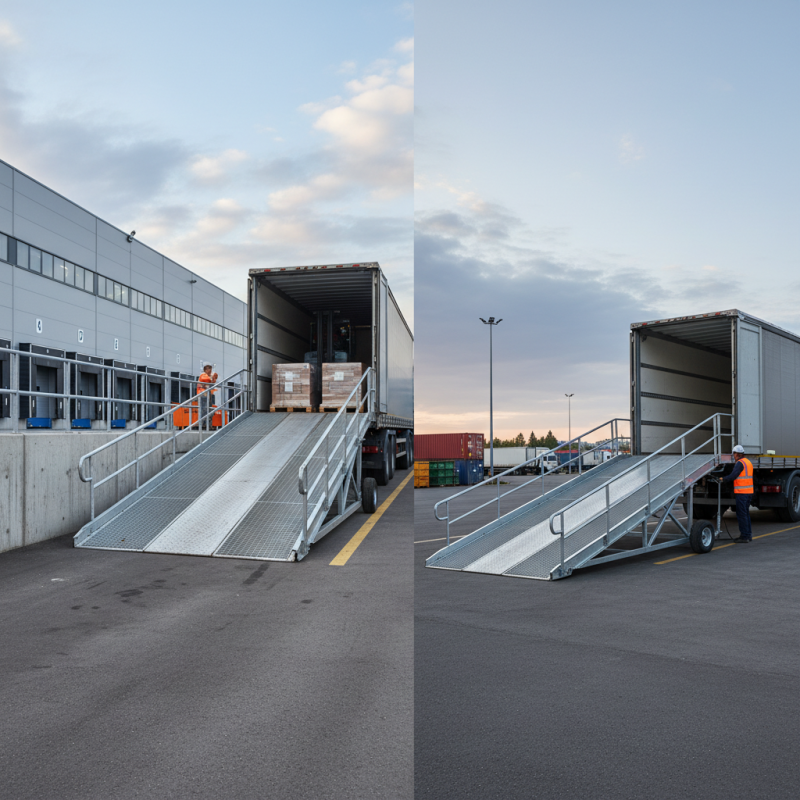
Why Choose Fixed or Mobile Loading Ramps for Your Business?

Understanding the Basics of Loading Ramps for Businesses

Loading ramps are essential for businesses dealing with heavy goods. They facilitate the safe and efficient movement of items in and out of vehicles. Understanding the basics of these ramps helps businesses make informed choices. Fixed and mobile ramps serve different needs. Fixed ramps provide a stable and permanent solution for high-traffic areas. They are reliable but limit flexibility.

On the other hand, mobile ramps offer versatility. Businesses can move them as needed, adapting to various loading situations. This flexibility is beneficial for companies with changing operational needs. However, the trade-off is durability; mobile ramps may not withstand heavy daily use as effectively as fixed ones.

Considering the type of goods often handled is vital. Heavy equipment requires sturdy ramps that can bear weight consistently. Regular assessment of existing ramps ensures safety and efficiency. Periodic maintenance prevents mishaps. Thus, selecting the right ramp type involves more than just convenience; it demands careful evaluation of operational demands and safety standards.

Why Choose Fixed or Mobile Loading Ramps for Your Business? - Understanding the Basics of Loading Ramps for Businesses

Ramp Type Load Capacity (lbs) Material Best Use Case Price Range ($)
Fixed Loading Ramp 5,000 Steel Permanent Loading Dock 2,000 - 5,000
Mobile Loading Ramp 3,000 Aluminum Flexible Use 1,500 - 3,500
Adjustable Loading Ramp 4,000 Steel and Aluminum Multi-Site use 2,500 - 4,500
Portable Loading Ramp 2,500 Aluminum Temporary Events 800 - 1,800

Fixed vs. Mobile Loading Ramps: Key Differences Explained

When considering loading ramps for a business, the choice between fixed and mobile options is crucial. Fixed loading ramps are permanent structures. They can handle heavier loads and are ideal for warehouses or distribution centers. These ramps require more space and planning, as they are often designed to fit specific dock heights. However, the permanence can limit flexibility.

Mobile loading ramps, on the other hand, offer versatility. They can be moved as needed, accommodating various truck heights and loading scenarios. This adaptability is valuable for businesses with fluctuating delivery needs. However, they may not support the same heavy loads as fixed ramps. Frequent movement could also lead to wear and tear over time.

Both types have their merits. Fixed ramps provide stability, while mobile ramps offer flexibility. Each choice requires careful consideration of your operations, space, and loading needs. Balancing these aspects can lead to significant efficiency gains. The ideal ramp should enhance operations without compromising safety or accessibility.

Benefits of Using Fixed Loading Ramps in Industrial Settings

In industrial settings, fixed loading ramps offer numerous benefits. They provide a stable and secure surface for loading and unloading goods. This stability reduces the risk of accidents, making operations safer for workers. Fixed ramps are designed to handle heavy loads consistently, making them ideal for warehouses and factories.

Tips: Regular maintenance is crucial. Inspect the ramp for wear and tear. Ensure that all safety features are functional.

A significant advantage of fixed loading ramps is their space efficiency. They can be installed in tight areas without compromising access. Proper planning ensures that they fit seamlessly into existing workflows. However, not all facilities are suited for fixed ramps; some may find flexibility in mobile options more beneficial.

Tips: Evaluate your space and loading needs. Consider whether a mobile ramp might suit your operations better.

Incorporating fixed ramps can streamline operations. Workers can move goods quickly and efficiently, reducing downtime. Yet, it’s essential to assess your business goals. Understand that choosing the right ramp requires consideration of various factors, including volume and frequency of use.

Benefits of Using Fixed Loading Ramps in Industrial Settings

Advantages of Mobile Loading Ramps for Flexible Operations

Mobile loading ramps offer businesses unparalleled flexibility. Their design allows for easy relocation, adapting to various loading dock configurations. This capability is crucial for companies that handle diverse shipments and operate in multiple locations. Unlike fixed ramps, mobile options can respond quickly to changing needs, making them ideal for warehouses with variable workloads.

Using mobile ramps can save valuable time and enhance efficiency. Workers can unload vehicles anywhere in the facility, minimizing downtime. These ramps can be quickly set up and secured, allowing for a quick transition from one task to another. However, businesses must ensure proper training for their team. Misuse can lead to accidents or damage. Safety should always be a priority, despite the convenience offered.

Moreover, investing in mobile loading ramps can lead to cost savings over time. The adaptability means reduced need for multiple fixed installations. Yet, they may not be suitable for every environment. Some operations might benefit more from a permanent setup. Businesses must evaluate their specific needs carefully before making a choice.

Selecting the Right Loading Ramp Based on Your Business Needs

When selecting a loading ramp, understanding your specific business needs is essential. Fixed loading ramps are often more stable and provide a permanent solution. These ramps can handle heavy loads and are ideal for warehouses and distribution centers. According to industry reports, up to 70% of companies report lower operational costs after switching to fixed ramps. This is mainly due to their durability and reliability.

Mobile loading ramps offer flexibility. They are perfect for businesses that require adaptability. For instance, if your shipping dock varies or needs frequent adjustments, a mobile ramp can save valuable time and effort. A study indicated that companies using mobile ramps increased productivity by 35%. This enhancement stems from quick setup and easier maneuverability.

Tips: Assess the weight capacity regularly. Ensure the ramp meets your load requirements. Regularly check for wear and tear to maintain safety.

Consider your space. A fixed ramp may require a designated area, while mobile ramps can fit in tighter spots. Think about your growth as well. A mobile ramp could be more beneficial if you plan to expand or relocate.

FAQS

: What are the main advantages of mobile loading ramps?

: Mobile loading ramps offer flexibility and can adapt to various loading dock configurations. They are easy to relocate and ideal for diverse shipments.

How do mobile loading ramps affect efficiency?

They save time by allowing workers to unload vehicles anywhere in the facility, minimizing downtime during operations.

Is training necessary for safe usage?

Yes, proper training is crucial. Misuse of mobile ramps can lead to accidents or damage, so safety should be prioritized.

Are mobile loading ramps suitable for every environment?

No, mobile ramps may not fit every operation. Some businesses may benefit more from a permanent, fixed setup.

How can mobile ramps lead to cost savings?

Investing in mobile ramps reduces the need for multiple fixed installations, potentially lowering overall operational costs over time.

What should businesses consider when choosing a loading ramp?

Assess specific needs like load capacity, stability, and adaptability based on business operations and future growth plans.

How do fixed ramps compare to mobile ramps?

Fixed ramps are more stable and durable for heavy loads, while mobile ramps provide greater adaptability for varying requirements.

What factors can affect ramp selection?

Space availability is important. Fixed ramps need designated areas, while mobile ramps can fit tighter spaces more easily.

How often should ramp conditions be checked?

Regular assessments for weight capacity and wear and tear are essential to maintain safety and ensure proper usage.

Is there any downside to mobile loading ramps?

They may not provide the same stability as fixed ramps and require careful consideration based on specific operational needs.

Conclusion

Loading ramps are essential tools for businesses that require efficient loading and unloading processes. Understanding the basics of these ramps is crucial, especially when determining what is the difference between fixed and mobile loading ramps. Fixed ramps provide stability and are ideal for industrial settings where frequent, heavy-duty use is needed, offering benefits such as increased safety and time efficiency. On the other hand, mobile loading ramps offer flexibility, making them suitable for operations that require adaptable solutions, allowing for easy repositioning and use in various locations.

When selecting the right loading ramp for your business, consider your specific needs, including the frequency of use, type of goods being moved, and available space. By carefully evaluating these factors, you can choose between fixed and mobile loading ramps that will best meet your operational requirements, enhancing productivity and safety in your loading processes.

Henry

Henry

Henry is a dedicated marketing professional with a profound expertise in the company's offerings. With years of experience in the industry, he possesses an impressive understanding of the market dynamics and consumer behaviors that drive success. Henry is committed to sharing his insights through......